
Build New vs. Remodel the Whole-House: Which Makes More Sense for You?
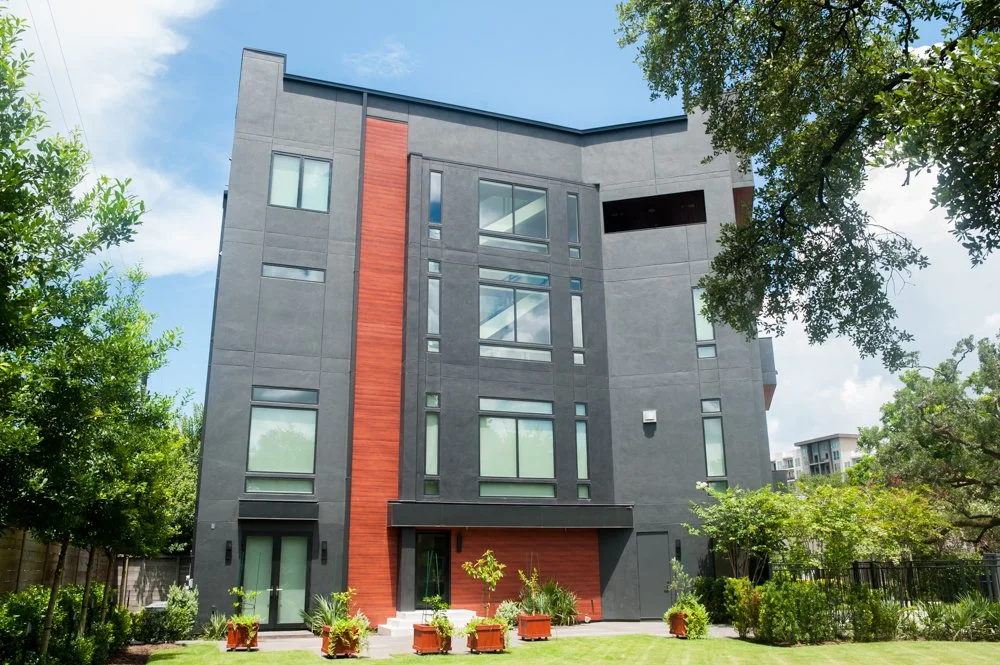
A Townhome New Build we took over in Houston’s museum district
Should I remodel what I have, or tear it all down and start over?
That’s the question I always get asked by homeowners who love their neighborhood but hate their floor plan. They might have an older ranch house on a great lot, or have a family who've outgrown their space and aren't sure if the answer is an addition or an entirely new home.
And the answer is almost always “it depends“. It’s hard to give a quick answer because most people try to answer without the information they actually need. They're going off of gut instinct, or a number they heard somewhere, or advice from someone who doesn't have the full picture.
Here's what I would advise a prospective client.
First: What We're Actually Comparing
Let me define the two paths clearly, because there's a lot of gray area in how people use these terms.
A whole-house remodel means working within the footprint of your existing home. You're keeping the foundation, the lot, and usually the structure — but updating, reconfiguring, or expanding what's already there. At scale, this could mean opening up walls, adding a second story, rethinking the entire floor plan, or adding square footage. It's renovation at a level most people don't experience twice.
Building a new home means starting from the ground up. You own a lot (or plan to buy one), you design a home from scratch with your architect and builder, and you build exactly what you want. Nothing is inherited from a previous owner. Every decision — layout, ceiling height, materials, systems — is made intentionally.
Both paths require serious planning, time, and investment. The question is which one actually gets you where you want to go.
Where Most Homeowners Start Wrong
Almost everyone starts with the vision: what they want the house to look like, which rooms they'd add, which walls they'd move. That's understandable. The vision is what motivates the whole project.
But the structure underneath has a say in what's possible. And sometimes, it can be limiting.
What's the flood plain status? How high is the foundation above grade? Can the lot actually drain away from the house? In Houston, a lot of the older ranch houses from the 1950s and 60s have their brick ledge sitting right at ground level— which means drainage is a real constraint, and putting significant money into the structure has limits that have nothing to do with design.
Structurally, I would want to know what the foundation looks like before anyone makes any decisions. An engineer needs to evaluate the foundation and make the call as to whether it will work for the scope being contemplated.
And if you live in the historic districts of Houston, in particular — tearing down may not even be an option if your home is a contributing structure. In those cases, remodeling isn't just a preference, it's the only path.
When a Remodel Usually Wins
A whole-house remodel tends to make more sense when most of the following are true:
You're in a neighborhood you don't want to leave. In Houston, a lot of the most desirable in-town neighborhoods — Meyerland, West University, Bellaire, The Heights — don't have many available lots. If you love where you are and a comparable lot isn't available nearby, remodeling is often the only way to stay.
You’re budget is lower. With a remodel/addition you are saving money since you won’t have to demo the house, regrade the lot, pour a new foundation, and reframe exterior walls.
The scope of your vision fits within the existing footprint. A remodel can accomplish a lot — reconfigured layouts, a second-story addition, a completely updated interior. The key is being honest about what "fits" means for your specific structure. Some visions require more change than a remodel can realistically deliver.
A faster start matters to you. Remodel permits in Houston can move significantly faster than new construction permits. In some cases, you can begin interior demolition before you're fully permitted. You're also not waiting out the process of utility disconnects, demolition, and lot clearing before real work begins — which can add a month and a half or more to a new build before a single thing gets built.
You don't need to do it all at once. A remodel can be staged in ways a new build really can't. If the full scope is larger than your current budget, you can tackle it in phases. However, you still need to map out the full plan first, so you can account for the whole picture, not just what you're doing today.
I've seen phased remodels where the homeowner had to dig up their yard twice because no one thought through the drainage the first time around. That's the kind of double-dip that proper planning prevents.
When Building New Usually Wins
A custom build tends to make more sense when most of the following are true:
The existing structure is working against you. It’s very rare to get an older home as well as a new one in regards to energy, moisture, and structural stability. If the changes you need require reworking major structural systems or fighting the bones of the house the entire way through, you may spend a lot more money retrofitting than starting fresh.
You have — or can acquire — the right lot. If you're open to a different neighborhood, or a lot has opened up where you want to be, a custom build gives you total control from the foundation up. You're not inheriting anyone else's decisions.
Your vision is very specific — and an existing home can't accommodate it. If you've been mentally designing your home for years — specific ceiling heights, a structural layout that doesn't exist in the Houston housing stock, systems and finishes chosen for exactly how your family lives — building new is often the cleaner path. One of the underrated advantages of new construction is that the entire team is working from a blank slate. Every decision is intentional rather than a response to what an existing structure will or won't allow.
Long-term cost of ownership matters to you. New construction means new systems — new roof, new HVAC, new plumbing and electrical. In a remodel, even a comprehensive one, you're often working around older infrastructure. You may replace some of it, but rarely all of it. Over a 15-to-20-year horizon, the difference in ongoing maintenance can be significant.
It’s Not Just About What You Want
Here's where the decision gets complicated: it's not just about what you want. It's about what the numbers actually say.
A lot of homeowners assume a total home remodel is cheaper than building new. However, when the full scope of the remodel starts to approach what a new build would cost, it’s often not.
In my experience, what often holds people back is the inability to make the decision without a reliable number. However, this requires commitment by putting something on paper. As a result, they do nothing. I've had homeowners call me, have a real conversation about the options, and then wait — two, three years — before calling back. By then, costs have moved. Their budget may have changed. But the analysis we need to do is exactly the same. The delay didn't help them. It just delayed the project.
The only way to know which path makes financial sense for your specific situation is to price both options honestly before you decide. That's exactly what our Pre-Construction Process is designed to do. Before you commit to a direction, we help you understand what each path actually costs, what's realistic for the structure you have, and where the risks are — so you're not making a six-figure decision based on assumptions.
One More Thing Worth Saying
Early in my career, I agreed to add a second story to a house while my friend's family was living on the first floor. I thought we could manage it — and technically, we did. But it was a disaster of a process. Keeping utilities live, shifting everything around, protecting what was below while we built above. My friend and his family were incredibly gracious about it. We're still good friends. But I would never agree to that scope with an occupied house again.
I share that not to scare anyone, but because it illustrates something real: the details of how you execute a project matter just as much as the direction you choose. Scope, phasing, whether you're living in the house, what the structure actually looks like underneath — these aren't small questions. They change the cost, the timeline, and your quality of life for the entire duration.
The best thing you can do before you decide anything is to sit down with someone who's seen both paths play out.
Ready to think through your options?
Schedule a Discovery Meeting with our team. We'll listen to what you're envisioning, ask the questions most people haven't thought to ask yet, and give you an honest read on which direction makes sense for your project.
