
Custom Home Builder vs General Contractor: What’s the Difference?
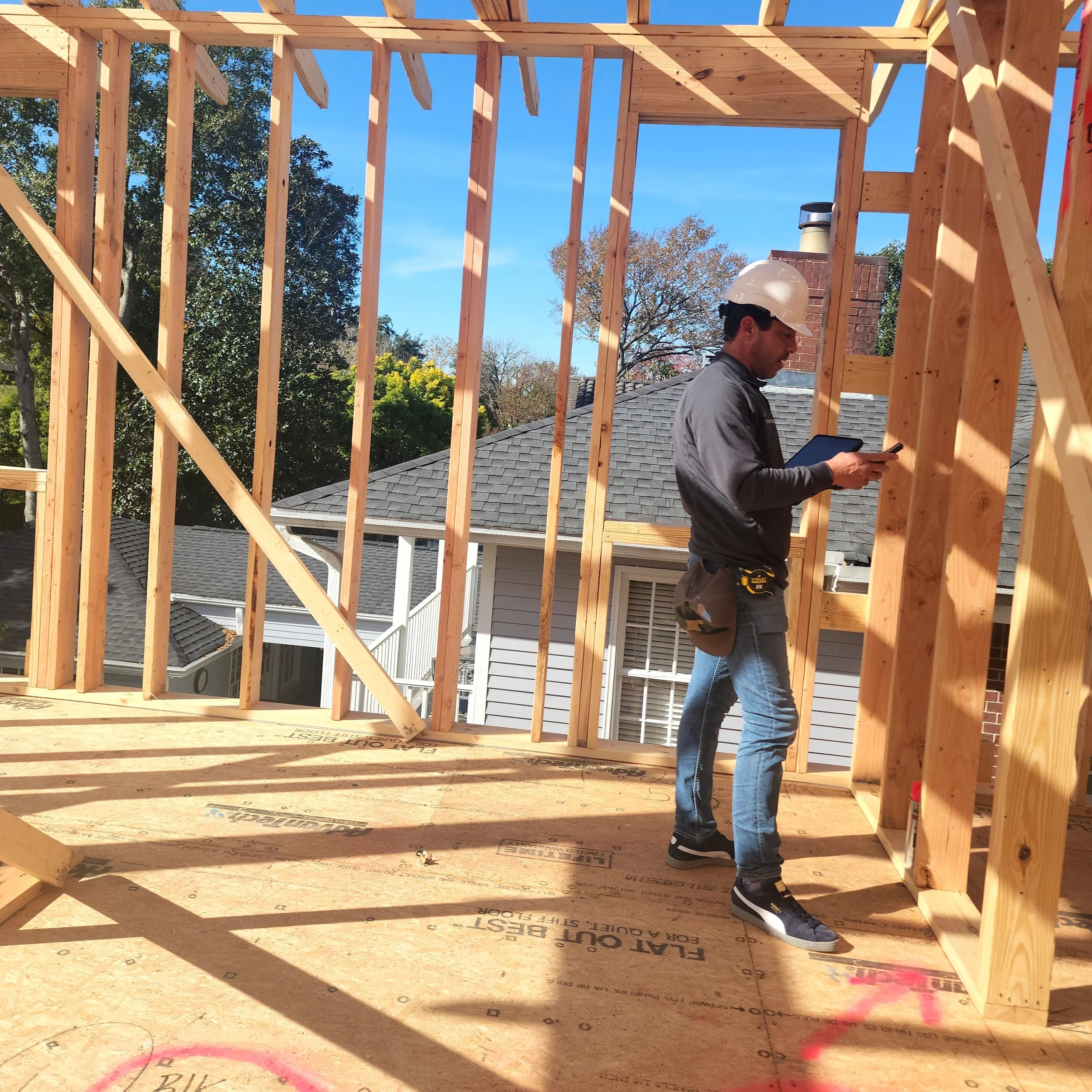
Daniel Aguilar, project manager, reviewing framing on a new construction
When people are thinking about building a home, they often use the words "builder" and "general contractor" interchangeably.
They do not mean the same thing.
Understanding the difference can save you a lot of time and energy with choosing who will work with you on your project.
What a General Contractor Does
A general contractor comes into a project after the plans are already done.
Someone else has already designed the house. The drawings are finished. The decisions about the layout, the structure, the systems are already made. The general contractor's job is to take those plans and build what's on paper. They may hire subcontractors. They may manage their own schedule. Regardless of what they do, their job is to make sure the work gets done.
But the key description to highlight is: the GC wasn't there when the important decisions were made. They're coming in after the fact to execute a plan they had no hand in creating.
That's fine if the plan is already great. But if something wasn't thought through — if the drainage doesn't work, or the layout doesn't match how the family actually lives, or the budget didn't account for something real — the GC builds it anyway. That's not their job to catch. Their job is to build what's in front of them.
What a Custom Home Builder Does
A custom home builder sees construction projects differently.
They're there from the beginning, perhaps even the very first conversation, where the plans and budget haven’t been made yet.
Building a custom home means building something that has never existed before. Every single one is different. Every lot is different. Every family's needs are different. Every budget has its own shape. There's no template to follow. There's no checklist where all the decisions are already made for you.
A production builder — someone building a neighborhood of similar homes — already has all of that figured out. The floor plans are set. The finishes are chosen. The subcontractors are lined up. All they have to do is keep things moving. That's a different job.
Building a true custom home means starting from nothing and figuring it all out. They direct the designs given by architects and designers as the homeowner’s advocate.
Custom Builders Assemble Design Teams
One thing that surprises people: a good custom home builder doesn't just show up with a crew of trade partners. They help homeowners build a full team — usually before construction starts.
The team is tailored to each project, but they typically include an architect, an interior designer, a structural engineer, and sometimes a building performance specialist who looks at energy efficiency and air quality. All of these people are communicating early, not in a sequence.
Why does that matter? Because when these people don’t collaborate, problems frequently appear. The architect might draw a design that the engineer says must change. The designer can select appliances that go way out of the builder’s budget. The builder finds out about a problem after the foundation is poured.
When everyone is in the room together from the start — and when the builder is the person facilitating the project — those problems get caught early when they’re cheap and easy to fix.
Builders Plan
Before we ever start building, there's a discovery phase where we gather as much information as we can to plan the overall project. What does the family actually need? Is the home on the flood plain? What's the budget really telling us about what's possible? Are there things about the existing structure that will affect the project?
I think of the builder's job in this phase as being an advocate for the homeowner. We're asking questions no one else is asking yet. We're catching things before they become expensive. We're making sure that by the time a crew shows up, the plan is actually right.
A GC doesn't do this. They're not hired for this. They come in after all of that is supposed to be settled.
If there’s a problem with the design that nobody caught — the GC will build anyway. And everyone else will find out later.
Why This Matters When You're Choosing Who to Work With
This might sound biased, but GCs have their role to fill. It just depends on what project you’re working on.
If you already have everything figured out, a General Contractor might be better for your purposes. A GC might even do it for a lower price. However, there is more potential for problems down the road that you’d have to look out for.
On the flip side, you have a Builder who was there before the plans, working with other industry experts, and asking questions to better understand the homeowners’ needs.
Those are very different things. And the difference usually shows up later — either in a home that fits your life, or in a project that keeps running into the same problems.
How to Think About This When You're Getting Started
If you're early in the process — before plans, before a budget is locked in, before you've chosen anyone — that's actually the best time to talk.
Not because we're trying to get hired. But because the decisions you make at the beginning shape everything that comes after. Who you bring in, in what order, and at what stage — that matters more than most people realize.
A Discovery Meeting is a good place to start. It’s not a sales pitch. It’s an honest conversation about where you are, what you're trying to build, and what the path forward actually looks like.
Want to understand how a builder can help you?
Schedule a Discovery Meeting with our team. We'll walk through your project, answer your questions, and help you see the full picture before you commit to anything.
